22 Sep 2026
Placă pentru mobilier din lemn de stejar: prelucrare CNC și aplicații pentru mobilier
Află mai multe >


MDF furniture board has become an important engineered panel material for modern cabinets, wardrobes, shelving, doors and customized furniture. Its uniform structure supports precision machining and smooth decorative finishes, but long-term performance depends on more than mechanical strength. Resin technology, formaldehyde emissions, moisture resistance, dimensional stability and surface treatment all influence the suitability of MDF for indoor furniture.
As furniture designs increasingly emphasize low-emission materials and stable service performance, MDF furniture board needs to be evaluated as a complete material system rather than only by thickness and density.
MDF is produced by combining wood fibers with adhesive and forming the panel under controlled heat and pressure. The adhesive system influences internal bonding, dimensional stability and the release of volatile substances.
This creates an important relationship between environmental performance and mechanical performance. A board must maintain sufficient fiber bonding while meeting the emission requirements of its intended application.
For residential furniture, especially wardrobes, bedroom furniture and children's products, low-emission material selection can become a core specification rather than a secondary feature. Documentation and testing should confirm the actual performance of the finished board rather than relying only on general descriptions such as “eco-friendly.”
Shandong Xingang Group Co., Ltd. focuses on environmentally oriented wood-based materials and states that its Xin'gang biomimetic adhesive contains zero formaldehyde, zero benzene and no harmful substances. The company has applied this adhesive technology in biomimetic decorative boards, ultra-thin density boards and biomimetic marine plywood.
The emissions of a finished furniture product do not depend exclusively on the MDF panel. Edge banding adhesives, surface coatings, laminates, paints and other auxiliary materials can also influence the final indoor environment.
For this reason, selecting low-emission MDF furniture board is only one part of material control. The complete furniture construction should be reviewed when the finished product has strict indoor-air requirements.
A sealed decorative surface can also change moisture behavior. If the front surface is laminated while a cut edge remains exposed, moisture can enter through the edge much more readily than through the finished face.
This is particularly relevant for kitchen cabinets, bathroom storage and furniture placed in humid indoor environments.
MDF absorbs moisture because its wood fibers are hygroscopic. When moisture content changes, the panel can experience dimensional movement and thickness swelling.
For furniture, this may appear as changes in door gaps, drawer alignment, edge condition or joint geometry. The risk increases when the furniture is used near sinks, kitchens, bathrooms or areas with fluctuating humidity.
Moisture-resistant MDF furniture board can reduce this risk, but board selection should be combined with proper edge sealing and surface protection. A moisture-resistant core cannot fully protect an exposed machined edge from prolonged water contact.
The appropriate solution is therefore a system comprising board grade, surface finish and edge treatment.
The required mechanical performance of MDF varies according to furniture design. A vertical cabinet side mainly needs to maintain dimensional stability and support loads transmitted through shelves and connectors. A long horizontal shelf experiences bending over its unsupported span.
Increasing thickness can improve stiffness, but it also increases weight and material consumption. Structural design should therefore consider board thickness, density, span length, load distribution and reinforcement.
For example, an 18 mm MDF furniture board may be suitable for many cabinet applications, while a long shelf carrying heavy stored goods may require a thicker board, shorter support spacing or an alternative structural solution.
Material selection is more effective when it is based on the complete furniture geometry rather than a universal thickness recommendation.
MDF provides a relatively uniform substrate for melamine, veneer, paint and other decorative finishes. This is particularly valuable when the furniture requires a consistent appearance across large panel surfaces.
However, surface quality depends on fiber distribution, sanding and manufacturing control. Uneven density or surface defects can become more visible after high-gloss painting or thin decorative films.
Machining also needs to be considered. CNC routing creates exposed edges that may require sealing and additional finishing before the final coating is applied. A stable board with predictable machining behavior can therefore reduce finishing adjustments.
Mobilierul folosit în asistență medicală, ospitalitate, bucătării sau alte medii cu contact ridicat poate necesita proprietăți suplimentare legate de igienă. Termeni precum „antibacterian” ar trebui să fie susținuți de metode de testare definite și de performanță măsurată, mai degrabă decât tratați ca limbaj general de marketing.
Shandong Xingang Group declară că materialele sale pe bază de lemn combină caracteristicile de mediu cu performanța antibacteriană și antivirale. Pentru un proiect de mobilier real, aceste afirmații ar trebui evaluate în raport cu aplicația necesară, standardul de testare și configurația produsului finit.
Această distincție este importantă deoarece tratamentul suprafeței, tipul de laminat și prelucrarea marginilor pot afecta comportamentul componentei finale de mobilier.
Chiar și atunci când specificația materialului este corectă, consistența producției rămâne critică. Variațiile de densitate, grosime, conținut de umiditate și starea suprafeței pot influența tăierea CNC, găurirea, bandarea marginilor și asamblarea.
Pentru producătorii de mobilă care produc volume mari, stabilitatea de la lot la lot poate fi mai valoroasă decât un singur eșantion de înaltă performanță. O placă care se comportă constant permite ca programele CNC, parametrii de tăiere și procedurile de asamblare să rămână standardizate.
Prin urmare, controlul calității ar trebui să includă inspecția dimensională, monitorizarea densității, controlul umidității, evaluarea legăturii interne și testarea emisiilor relevante în conformitate cu specificațiile produsului.
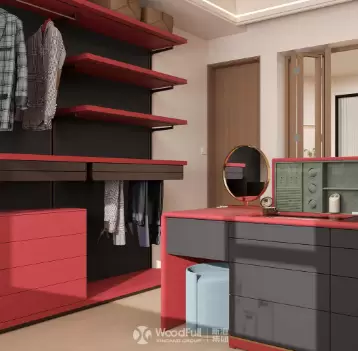
Un panou de garderobă poate acorda prioritate emisiilor scăzute, stabilității dimensionale și finisării suprafeței. Un dulap de bucătărie poate necesita o rezistență mai puternică la umiditate și o etanșare fiabilă a marginilor. Un raft cu deschidere lungă are nevoie de o rigiditate adecvată și performanță de prindere a șuruburilor, în timp ce mobilierul decorativ vopsit poate pune un accent mai mare pe uniformitatea suprafeței și pe calitatea prelucrarii.
Aceste aplicații demonstrează de ce nu există o specificație unică pentru plăci de mobilier MDF potrivită pentru fiecare produs. Densitatea, grosimea, proprietățile mecanice, rezistența la umiditate, performanța la emisii și compatibilitatea cu finisajele ar trebui să fie adaptate structurii și mediului real al mobilierului.
Pentru producătorii care dezvoltă produse de mobilier mai ecologice, strategia materialului se poate extinde și dincolo de placa în sine. Concentrarea grupului Shandong Xingang asupra adezivilor orientați spre mediu și a materialelor pe bază de lemn reflectă o abordare mai largă în care tehnologia rășinilor, performanța panourilor și aplicațiile de mobilier durabile sunt luate în considerare împreună.
The most reliable MDF furniture board is ultimately one that provides predictable machining, stable dimensions, sufficient structural performance and controlled emissions throughout its intended service life. By connecting board technology with the finished furniture's operating environment, manufacturers can achieve a more consistent balance between processing efficiency, durability and indoor environmental requirements.